

详细内容
AI Services and Development Company
Accelerate Your Business with Cutting-edge AI Solutions
Navigation
- Artificial Intelligence Services and Solutions to help you unlock greater value
- Beneficial results of artificial intelligence services and solutions in business
- Why choose AI Superior
- AI solutions we can build for your project
- Industries
- Our Work Process
- Explore our customer cases
- Our awards and recognitions
- FAQs
- Check out AI Insights Hub by AI Superior
- Let’s discuss your next AI project
Artificial Intelligence Services and Solutions to help you unlock greater value
AI Superior is a German-based AI services company focusing on end-to-end AI-based application development and AI consulting. We design and build web and mobile apps as well as custom software products that rely on complex machine learning and AI models and algorithms. Our Ph.D.-level Data Scientists and Software Engineers are ready to help you create your success story.
Customized development of AI-driven software solutions tailored to meet your specific business needs and objectives.

Comprehensive training programs to equip individuals and teams with the knowledge and skills required to leverage AI effectively
Artificial Intelligence Training

We assist you in the process of recognizing, assessing, prioritizing, and defining potential areas of application for data science, machine learning, and artificial intelligence.
Artificial Intelligence Consulting

We provide guidance and assistance in fostering a data-driven mindset and behaviours within your organization, cultivating a culture that values and embraces data and AI.


Start your data journey
Trusted by










Beneficial results of artificial intelligence services and solutions in business
75%
of executives believe AI helps improve decision-making and provides a competitive advantage.
45%
of activities in various industries can be automated with the help of AI.
72%
of customers expect personalized engagement from businesses that can be reached with the help of AI.
40%
reduction in financial losses among organizations that use AI for fraud detection.
Why choose AI Superior as your artificial intelligence
services partner

Team of seasoned professionals
Our team of highly skilled consultants, many of whom have a Ph.D. degree in AI or related fields, possess extensive knowledge and hands-on experience with different kinds of AI projects. We’ve developed AI-driven solutions for various industries, ranging from insurance, construction, and finance to pharmaceutical and real estate.
Utilizing cutting-edge technology
In addition to years of experience and deep domain knowledge in AI development, we take pride in using the latest tools & technologies. Whether you’re looking to adopt AI for the first time, want to audit existing AI systems, or scale your AI systems, we can help!

Guaranteed reliability and flexibility
Transparency and continuous communication are paramount for the success of any AI project or solution. At AI Superior, we prioritize close collaboration with our clients, ensuring they comprehend the value of each step along the way. Our flexible approach allows us to adapt to your project goals and requirements, providing you with peace of mind.

Elevate your business to new heights
As a trusted artificial intelligence service company, we integrate AI into various processes to drive long-term efficiency and ensure business continuity. Through careful analysis, we identify areas and operations where AI-powered solutions can add substantial value to your business, empowering you to harness the full potential of AI.
AI solutions we can build for your project

Computer vision and Image Processing
Leverage the power of computer vision to drive impactful image analysis and processing to enhance growth and solve business challenges. Our computer vision technology, which includes video analysis, object detection, and image analysis, can help you extract meaningful information from videos and images and turn it into actionable insights. Whether you’re looking for image segmentation, emotional analysis, optical character recognition, face recognition, or contextual image classification, AI Superior has you covered.

Natural Language Processing
Each customer interaction, whether that’s through social media, email, or customer support chat, generates a large volume of unstructured textual data every second that can be valuable for business. With our natural language processing services, you can discover invaluable insights from this data, solve various text analysis problems such as sentiment analysis, and find meaningful information in seconds. Our experts can also help develop robust NLP apps with features like question answering, speech recognition, semantic search, machine translation, control spamming, and emotional meaning.

Predictive analytics
Because of the constantly changing business landscape, historical data is no longer enough to drive profitable ROIs. This is where predictive analytics can help. It takes both current and historical data to provide trends and insights about the future for better data-driven decision-making. AI Superior’s predictive analytics services can help you drive actions based on customer behaviour and predicted market trends. From fraud detection and predicting equipment failure to forecasting market trends, we guarantee reliable and accurate predictive models that can boost business.

BI solutions
Make smarter decisions based on business data with our BI solutions. We can help you identify areas for improvement, organizational issues, and new opportunities for your business by taking advantage of raw, unstructured data coming from multiple origins. Our BI solutions can help improve operational efficiency and make compelling visualization for data-driven decisions and strategies.

Big Data Analytics
Make decision-making quicker and better with big data analytics in real time. With our expertise in big data analytics, we can help implement analytical capabilities that you can use to solve business challenges, predict future outcomes, and gain new actionable insights and patterns that can make your business more efficient. You can also analyze data from different sources, including logs, transactional applications, and sensors, to identify opportunities for creating new services and products and gauging potential risks and customer needs.
Wondering if your problem can be solved with AI?
Industries
Building award-winning AI solutions across multiple business domains.


Our Work Process
At AI Superior, we follow a systematic approach for all AI development projects. When you choose us as your partner, here’s what you can expect:
Discovery stage:
We begin by thoroughly understanding the problem you aim to solve. Through close collaboration, we gather insights and define the general direction and approach for the solution. We provide high-level estimations to give you a clear understanding of the project scope and expected outcomes.
Initial setup:
Once we grasp your requirements, we delve deeper into understanding your team and the data needed for a successful project. We assess the available dataset to determine if AI is the optimal solution for addressing the problem at hand.
Building MVP:
We adopt an incremental approach by starting small and utilizing the available dataset to test the viability of our idea. This allows us to determine the effectiveness of the proposed solution and assess its worthiness for further investment.
Scaling and integrating:
After successfully developing and testing a prototype, we focus on integrating the AI solution into your existing system. We ensure seamless compatibility with your data, fine-tuning the models, and making necessary adjustments as required.
Evaluating results:
We work closely with you to comprehensively evaluate the results of the implemented AI integration. Our goal is to provide valuable insights and ensure their accurate interpretation, enabling you to derive maximum value from the AI solution.
By following this process, we ensure transparency, collaboration, and a thorough understanding of your needs throughout the project, resulting in successful AI implementations that drive tangible business outcomes.
Customer success stories
AI Superior’s Advanced Graffiti Detection System
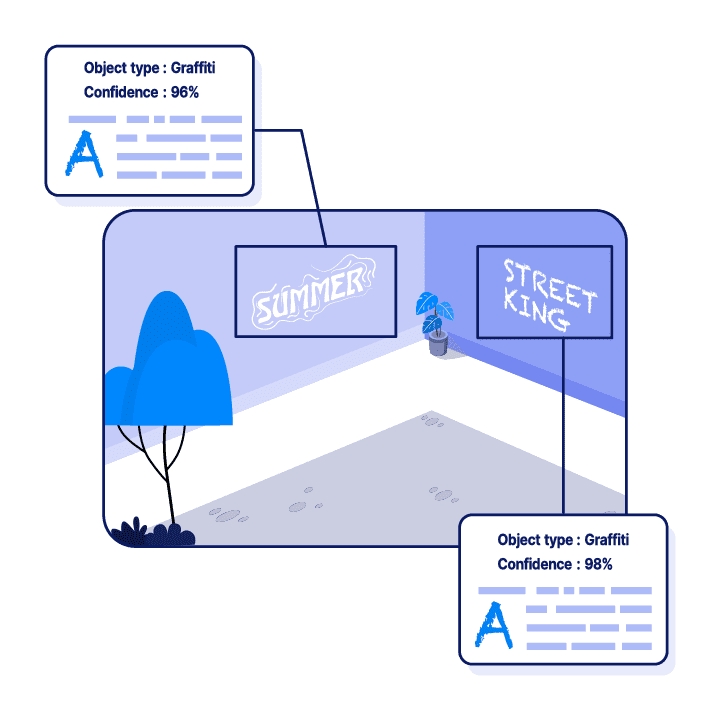
Empowering Organizations with Custom LLM-Enabled Chatbot Solutions
The AI Superior team developed a web application that allows users to communicate with a Custom LLM through a chatbot interface. This innovation empowers organizations to establish private, hosted

Enhancing Workplace Hygiene with AI-Powered Object Detection
Harnessing Deep Learning for Urban Zone Pricing Analysis

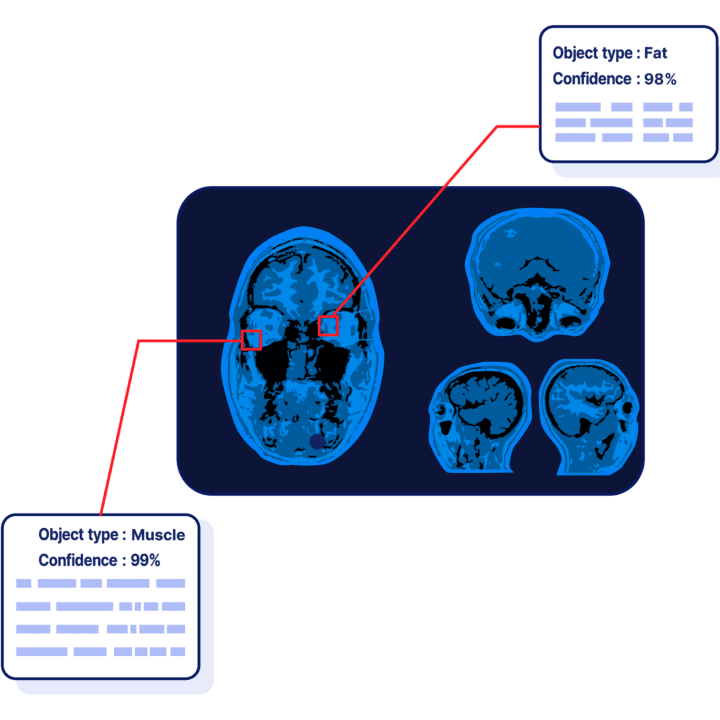
From Scans to Insights: Using Deep Learning to Estimate Fat and Muscle Volume of Human Eyes
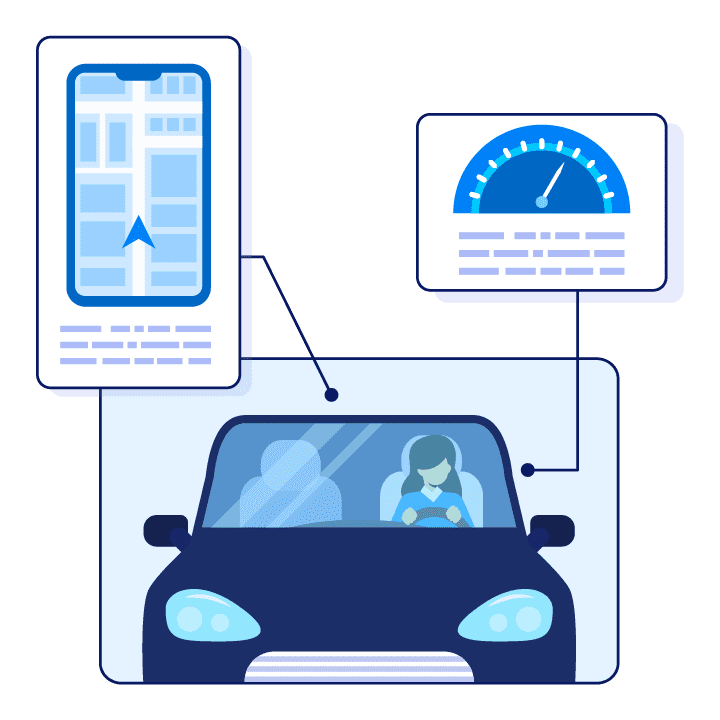
Data-Driven Insurance: Deep Learning Solution for Usage-Based Insurance
AI Superior’s Advanced Graffiti Detection System
Empowering Organizations with Custom LLM-Enabled Chatbot Solutions
The AI Superior team developed a web application that allows users to communicate with a Custom LLM through a chatbot interface. This innovation empowers organizations to establish private, hosted
Proof of Concept (PoC)
We help you test your product idea
Minimum viable product (MVP)
We help you validate your business model with a minimum viable product fit
Product
We help you scale from MVP to a full-scale product
AI Development Packages
for Startups
AI Superior offers fixed AI development plans tailored to support startups at every stage of the software development process. From AI proof of concept (PoC) to fully scalable products leveraging advanced AI models, our plans ensure a guaranteed outcome at a predefined price.
AI Superior Clutch Review Widget
5.0
prevnext
slide 1 to 4 of 12
1 of 12
We are Trusted Partners of NGOs, NPOs & NCOs
Our awards and recogitions







Still uncertain about how an AI services company can help your business? Read the FAQs to find the answers:
What are typical AI services?
We offer a range of AI services to help businesses harness the true power of AI. Some typical AI services include:
Custom AI solutions: We build AI solutions tailor-made to your business needs and challenges. Our AI experts closely work with you to understand your unique requirements and develop AI systems that meet your needs, improve efficiency, put you ahead of competitors, and drive innovation.
AI Consulting: We specialize in providing strategic guidance to businesses looking to adopt AI to drive growth and improve operations. Experts at AI Superior assess your business needs, identify AI opportunities, and develop a strategy for AI development and implementation.
Implementation: Once a plan is in place and an AI solution is deemed viable, the AI consulting company works to implement the project. This involves building the necessary framework, selecting and customizing the model, and integrating the AI solution with the existing system.
AI Training & Education: We offer training modules, workshops, and lectures for businesses looking to upskill their employees in AI. From coding rules to data science team training and from machine learning and data mining workshops to lectures on AI software development, we strive to provide leading AI skills that can keep your business relevant in today’s constantly changing business landscape.
AI Integration & Deployment: At AI Superior, we help businesses integrate AI into their existing legacy systems and workflows. Our experts can incorporate AI into existing software applications, optimize models and algorithms for faster performance, and deploy them seamlessly into your existing processes.
Data Analysis: Professionals at AI Superior help businesses extract valuable information from raw data using AI. We can help you identify trends and patterns and provide actionable insights for data-driven decision-making.
How can businesses benefit from AI services and solutions?
As AI evolves, businesses get to enjoy more benefits—greater customer satisfaction, increased employee productivity, and improved business operations.
Using AI to analyze customer behaviour and preferences and provide personalized experiences and tailored recommendations can result in higher customer satisfaction, higher conversion rates, and increased engagement and loyalty, which is ultimately good for business.
AI can also automate mundane and repetitive tasks so that your employees can focus more on innovating rather than routine tasks. It can also process huge amounts of data quickly and efficiently and process complex calculations, leading to improved productivity, reduced human error, and better efficiency. Plus, automating repetitive tasks helps businesses save resources and time.
Fully leveraging AI can also put you ahead of your competitor since it allows businesses to identify new opportunities, respond quickly to market changes, and innovate faster.
What is AI as a service?
AI as a service is a cloud-based service that allows you to use AI solutions and services pre-configured on the cloud. It follows a pay-as-you-go model and allows you to experiment with AI and ensure that it provides value to your business before making any investment. It also allows businesses to use AI in production without a huge up-front investment, and with low risk and greater speed.
Numerous platforms provide AI as a service and allow you to experiment with their ML algorithms and services. At AI Superior, we understand that it can become overwhelming to choose the right tools and platforms that completely meet your needs from today’s ever-expanding market, but our AI consultants can help. Our experts can guide you through the selection process and help you integrate all the necessary tools into your project.
How much do AI services cost?
Since every AI project is unique, the cost of AI services can vary and depend on a variety of factors, including the complexity of the project, availability of data, deployment considerations, and customization needs. While we can’t give an exact figure without knowing the project details, we closely work with our clients to assess their needs and provide personalized solutions that fit their budgets. Get in touch with us today, and we’ll be happy to provide you with a customized quote based on your project.
What AI solutions are the most common in business use?
From operations and marketing to customer service, AI is used in many aspects of business. Some common use cases include:
Chatbots for better customer service: Companies can streamline and improve their customer service processes with chatbots and free up their customer service representatives for problems that require human intervention. Chatbots can also route customers to representatives who can address their questions better and be available 24/7 to solve customer queries.
Personalized recommendations: AI can analyze customer behaviour and recommend products that align with the user’s interest. This is particularly popular with e-commerce and streaming websites. By analyzing the kinds of shows and movies you watch the most or products you search the most for, the AI can present you with similar titles to keep you on the platform for longer.
Audience segmentation for targeted campaigns: AI is used in the advertisement industry to segment users and make targeted campaigns to boost sales, especially in highly competitive industries.
Sentiment analysis for customer satisfaction: Sentiment analysis with AI allows companies to gauge customer reactions and gather insights on how customers view their brand by scanning through ratings, reviews, and posts that mention the brand. These insights help companies identify areas that can be improved to ensure better customer service.
Fraud detection: Companies use AI to identify and respond to fraud and prevent cybercrime. Different machine learning algorithms are used to identify suspicious transactions and whenever there’s a risk of fraud, the transaction is stopped and relevant parties are informed of the risk.
Optimizing supply chain: AI is also helpful for companies that struggle to deliver products on time. It can help predict the price of the material and shipping and estimate the time it’ll take for the products to pass through the supply chain. As a result, companies can make better decisions about the optimal way of shipping products. It is also commonly used to find faster routes to help delivery drivers.
Check out AI Insights Hub by AI Superior

AI in Space: How ML is Revolutionizing Space Exploration
Space exploration has always captured the attention of humanity. The pursuit to understand the cosmos, unravel its mysteries, and discover new frontiers is undeniably captivating, however, this journey is not without its challenges. The vastness of space, the harsh conditions, and the sheer distance from Earth have made space exploration a daunting endeavor.
However, with the latest advancements in artificial intelligence (AI), humanity has been able to push the boundaries of what’s possible in the final frontier. From autonomous rovers to data analysis and satellite operations, artificial intelligence is helping us understand the mysteries of our universe.
In this blog post, we’ll delve into the exciting world of AI in space exploration and discover how it’s shaping the future of interstellar discovery.
AI Superior Clutch Review Widget
5.0
prevnext
slide 1 of 12
1 of 12
AI Superior Founders
AI Superior was founded in 2019 in Darmstadt, Germany by Dr. Ivan Tankoyeu and Dr. Sergey Sukhanov. Fuelled by their deep expertise in artificial intelligence and a shared vision for its limitless possibilities, they created a company that delivers cutting-edge artificial intelligence services and software solutions. With a talented team and a customer-centric approach, AI Superior is empowering businesses worldwide with innovative AI technologies.

Dr. Ivan Tankoyeu

Dr. Sergey Sukhanov
AI Superior Awards
Let's work together!
5 Ways AI Is Used in Space Exploration
Autonomous Rovers
AI is playing an increasingly important role in space exploration, primarily through the deployment of autonomous vehicles. Rovers like NASA’s Curiosity and Perseverance have been executing autonomous navigation missions across the Martian terrain for years. These rovers are equipped with sensors engineered to detect environmental hazards, including rocks, craters, and various terrain features. Subsequently, an AI-driven system analyzes the data to determine the best path forward, enabling the rovers to safely savigate the Martian landscape mitigating the risk of collisions. Furthermore, NASA’s Perseverance is equipped with AI software known as Autonomous Exploration for Gathering Increased Science ( AEGIS). AEGIS enables the Perseverance to collect valuable data on the different types of rocks and other Martian features that it discovers while driving Mars surface. This capability, in turn, enables us to learn more about the composition of the planet.
Satellite Operations
Another way AI is revolutionizing space exploration is through satellites operations. AI can provide more efficient and rapid solutions for managing satellite operations, including critical collision-avoidance maneuvers. Take, for instance, SpaceX’s Starlink satellites, which leverage an autonomous collision avoidance system driven by AI. This system is designed to detect the presence of nearby orbital debris and other hazards in real-time and swiftly take evasive actions by adjusting the speed and trajectory of the satellite. These adaptive measures ensure that the satellite safely navigates its path, avoiding any collisions that could jeopardize its mission or the safety of other space assets.
Data Analysis
AI plays a pivotal role in data analysis within space exploration, offering more precise and efficient methods of analyzing data captured from space missions. Satellites, probes, and other space exploration tools capture and collect vast amounts of data and AI algorithms play a crucial role in analyzing and interpreting this data. Machine learning models, particularly, exhibit a remarkable ability to identify patterns, classify celestial objects, detect anomalies and even venture into the real of predictive analysis. By harnessing the power of AI, scientists can now unlock deeper insights from the cosmos and accelerate our understanding of the universe.
Rocket Landing
Rocket landing is a complex and critical aspect of space exploration. The safe and precise return of rockets to Earth or their controlled landing on other celestial bodies is essential for mission success. In recent years, the integration of artificial intelligence has significantly improved how rockets operate.
SpaceX, for instance, employs an A-driven system to analyze data from rocket’s sensors and cameras. This AI system then calculates and adjusts the rocket’s trajectory in real time, accounting for variables like wind and atmosphere, ensuring optimal landing positioning.
Galaxy Mapping
AI has ushered in a new era of precision in star and galaxy mapping, enabling astronomers to accurately identify stars and galaxies in space and even understand their physical properties (like mass and age) Through AI-based algorithms, astronomers can now detect, classify, and recognize patterns in star clusters that form distant nebulae and classify other features that are detected in deep space.
One example is NASA’s Kepler telescope which leverages AI to discern subtle dips in the light emitted by stars. These fluctuations indicate the presence of planets and help scientists identify the likely location of planets. AI’s predictive prowess can also be used to forecast the behavior of stars and galaxies over time, empowering scientists to gain invaluable insights that can be used for future mapping and exploration missions.
Conclusion
Artificial intelligence is transforming space exploration in ways previously thought impossible. It’s enabling us to venture deeper into space, gather more data, and make groundbreaking discoveries. As AI continues to evolve, we can expect even more exciting developments in the field of space exploration. Whether it’s exploring distant planets, unraveling the mysteries of black holes, or understanding the origins of our universe, AI is proving to be an invaluable tool in our quest to explore the cosmos.

How can sentiment analysis be used to improve customer experience?
In today’s highly competitive business landscape, customer experience has become a crucial factor in determining the success of any organization. Understanding how customers feel about your products, services, and brand is invaluable for making informed decisions that can lead to improvements. This is where sentiment analysis or opinion mining comes into play. In this article, we will explore what sentiment analysis is, its different types, and why it is essential for businesses looking to enhance customer experience.
What is Sentiment Analysis?
Sentiment analysis, or sentiment mining, is a natural language processing (NLP) technique used to determine the emotional tone or sentiment expressed (positive, negative, or neutral) in text, such as customer reviews, social media posts, or survey responses.
Types of Sentiment Analysis
Emotion Detection Sentiment Analysis: Emotion detection, as the term implies, assists in identifying the emotions expressed in text. It can detect emotions like happiness, anger, sadness, fear, and surprise, providing deeper insights into customer feelings. Emotion detection systems often rely on lexicons, which are compilations of words associated with specific emotional states.
Fine-Grained Sentiment Analysis: Fine-grained sentiment analysis provides a more nuanced understanding of sentiment. It evaluates the opinion’s polarity, which can range from a basic binary classification of positive and negative sentiment to more detailed specifications, such as very positive, positive, neutral, negative, and very negative. This level of granularity allows businesses to pinpoint specific areas for improvement.
Aspect-Based Sentiment Analysis: Aspect-based sentiment analysis delves into the specifics of customer feedback by identifying and categorizing sentiment related to different aspects of a product or service. For example, imagine you run a restaurant, and you come across a customer review that mentions, “The food was excellent, but the service was slow.” Using aspect-based sentiment analysis, you can identify that the customer had a “positive” sentiment about the “food” but a “negative” sentiment regarding the “service.” This type of analysis helps businesses monitor customer perceptions of their products and services and identify their strengths and weaknesses.
Intent-Based Sentiment Analysis: Intent-based sentiment analysis focuses on understanding the underlying intentions or goals of customers when expressing their sentiment. It helps businesses identify whether customers are seeking information, making a complaint, or expressing satisfaction, allowing for more tailored responses.
U tilizing Sentiment Analysis to Improve Customer Experience
Sentiment analysis isn’t just a passive tool for understanding customer sentiment; it can provide valuable insights that enable businesses to enhance customer service and improve the overall customer experience. Here’s how:
Tailored Recommendations: By analyzing the sentiment behind customer reviews and feedback, businesses can better understand their preferences. Sentiment analysis can help recommend products or services that align with individual customer preferences, enhancing the likelihood of repeat business.
Proactive Issue Resolution: Sentiment analysis enables businesses to identify emerging issues or negative sentiment trends. When negative sentiments are detected, companies can take swift action to resolve problems and prevent further customer dissatisfaction. This proactive approach demonstrates a commitment to customer satisfaction.
Feedback Loop for Product Development: Sentiment analysis can feed directly into the product development process. Businesses can use customer feedback, especially fine-grained and aspect-based sentiment analysis, to prioritize feature enhancements, bug fixes, and new product development that align with customer needs and desires.
Enhanced Marketing Campaigns: Understanding the sentiment of past marketing campaigns helps in creating more effective future campaigns. By analyzing the emotional tone of customer responses to marketing materials, businesses can fine-tune their messaging and targeting to resonate better with their audience.
Sentiment-Driven A/B Testing: Companies can use sentiment analysis to measure the impact of changes in their products, services, or policies. By conducting A/B tests and comparing the sentiment of customers in different groups, organizations can make data-driven decisions about which changes lead to improved customer satisfaction.
Employee Training and Feedback: Sentiment analysis isn’t limited to customer feedback. It can also be applied to internal communications and feedback from employees. Understanding employee sentiment can lead to improvements in team dynamics, workplace culture, and customer service quality.
Incorporating sentiment analysis into these aspects of your business can result in a more customer-centric approach, leading to increased customer loyalty, higher customer satisfaction, and ultimately, improved customer experiences.
Conclusion
Sentiment analysis is a powerful tool that goes beyond just understanding customer sentiment; it actively contributes to enhancing the overall customer experience. By leveraging the insights gained from sentiment analysis, businesses can make informed decisions, deliver personalized experiences, and continuously improve their products and services to meet and exceed customer expectations. This proactive approach not only benefits customers but also strengthens the brand’s reputation and competitiveness in the marketplace.
Ready to take the next step in harnessing the potential of sentiment analysis? Contact us today, and we’ll be happy to consult with you on Natural Language Processing (NLP) and sentiment analysis solutions development tailored to your unique business needs.

Large Language Models Applications in Business
In today’s rapidly evolving technological landscape, large language models (LLMs) have emerged as game-changers, reshaping the way businesses operate and interact with their customers. In this article, we will explore the world of LLMs and showcase how this technology can enhance any business
What are Large Language Models (LLMs)?
Large language models are a type of deep learning model designed specifically to understand, process, and generate human language. These models can perform various language-related tasks, from answering questions conversationally and summarizing texts to language translation, content generation, sentiment analysis, and more.
How are Large Language Models trained?
LLMs are pre-trained on massive amounts of data and employ self-supervised learning techniques to predict the subsequent token within a sentence. With each iteration, the model refines its language understanding and generation abilities, achieving higher levels of precision.
List of leading LLMs
Several LLMs have gained prominence in recent years due to their impressive capabilities. Some of the most notable examples include OpenAI’s GPT-3 and GPT-4, with the latter offering more advanced language understanding and generation. Google has also made significant contributions with models like PaLM-2, BERT, T5, and LaMDA. Meta, formerly known as Facebook, has developed LLaMA and RoBERTa, while Anthropic has introduced Claude.
Business Applications of Large Language Models
LLMs have found extensive applications across various industries, revolutionizing how businesses engage with their audience. Some dynamic applications of LLMs include:
Customer Service:
Businesses can reduce response time and increase customer satisfaction by leveraging LLM-powered chatbots. These virtual assistants can handle various customer inquiries at the same time, provide instant information and improve overall user experience while freeing up human agents for more complex tasks.
Content Generation:
LLMs are proficient in generating high-quality articles, blog posts, product descriptions, and marketing materials.
LLMs can help streamline content generation, saving time while generating high-quality content. From articles and blog posts to marketing material and product descriptions, Large Language Models can help businesses save resources while maintaining a consistent style and tone.
Translation and Localization:
LLMs can help break language barriers by facilitating seamless language translation. By leveraging LLMs, businesses can expand their reach to global audiences confidently. LLMs can even provide real-time translation of both written and spoken language for real-time customer support.
Sentiment Analysis:
Large language models can help businesses gain insights into customer satisfaction levels and tailor strategies accordingly. LLMs are able to analyze textual data, such as reviews and social media posts to gauge gauge customers’ sentiment and opinions, allowing businesses to refine strategies, ensure meaningful engagement, and optimize overall user experience.
Market Research:
LLMs can scour vast amounts of data to identify emerging trends, market shifts, and consumer preferences, helping businesses make informed decisions and pivot strategies based on real-time insights.
Legal and Compliance Assistance:
LLMs can quickly extract key information without compromising understanding. By leveraging LLMs legal professionals can automate contract reviews, identifying potential risks, and ensuring compliance, and automate legal document generation. This allows awyers to focus on more strategic aspects of their work while saving time.
Conclusion
As businesses continue to adapt to an increasingly digital world, the applications of LLMs become more evident and essential. These AI-powered tools unlock new levels of efficiency, engagement, and innovation, allowing companies to deliver better services, reach wider audiences, and gain a competitive edge.
Through a partnership with a reliable expert capable of creating and deploying tailored generative AI solutions, businesses can leverage the potential of this technology to foster innovation and access fresh avenues for expansion.
To tap into the transformative power of LLMs, look no further than AI Superior. From large language model consulting and strategic planning to seamless integration and maintenance, AI Superior’s LLM development services can help you leverage the power of LLMs to enhance your business.

Exploring the Transformative Power of Generative AI Applications for Businesses
In today’s rapidly evolving technological landscape, businesses are constantly on the lookout for innovative ways to gain a competitive edge. Generative Artificial Intelligence (AI) has recently emerged as a groundbreaking technology with the potential to revolutionize various aspects of business operations. In this article, we will explore the concept of Generative AI and its top applications across different industries.
What is Generative AI?
Generative artificial intelligence (AI) refers to algorithms that enable users to generate new content based on a variety of inputs. These include images, text, audio, code and more. Unlike traditional AI models, generative AI models can learn from existing data and generate new outputs based on that information
How Does Generative AI Work?
Generative AImodels are often built using neural networks, a subset of machine learning that’s inspired by the human brain and attempts to mimic the way that biological neurons signal to one another.
Generative AI commences by utilizing a given prompt, including text, image, video, or any input that the system is capable of handling. Subsequently, different AI algorithms generate new content in response to the provided prompt.
Top Generative AI Applications for Businesses Content Generation
Generative AI has transformed the way businesses create content by automating the process of generating text, images, audio, videos, and more. This technology can be employed to draft compelling marketing copy, generate personalized email content, and even produce social media posts. Thanks to it, organizations not only save time and resources but also ensure a consistent flow of content.
Product Design and Prototyping
In industries such as fashion and manufacturing, generative AI can aid in product design and prototyping. By analyzing existing designs and user preferences, AI models can generate new design concepts, helping businesses innovate and iterate faster. This can significantly reduce the time required to bring new products to market.
Customer Support
Generative AI-powered virtual assistants and chatbots are becoming increasingly sophisticated in simulating human-like conversations. These AI-powered conversational agents can understand and respond to user queries, providing real-time assistance to customers on websites, apps, and messaging platforms. This technology streamlines customer support, enhances user experience, and operates 24/7.
Art and Content Creation
For businesses in creative industries, generative AI offers a novel way to produce art and multimedia content. Creatives can harness the power of AI to generate unique pieces, merging human creativity with machine-generated ideas. Musicians can use AI to compose melodies, and filmmakers can explore new visual effects and animations.
Data Augmentation and Analysis
Generative AI can assist businesses in generating synthetic data to augment their datasets for training machine learning models, which comes in handy when dealing with limited data availability. Moreover, AI models can also help analyze vast amounts of data, extracting insights and patterns that can inform strategic decision-making.
Software Development
IT departments can leverage generative AI to handle small technical tasks, like automating code generation, debugging, and system testing. This approach can accelerate the development process and help programmers create more efficient and robust software applications.
Conclusion
Generative AI stands as a transformative technology with a vast array of applications. From content generation to product design, customer support, software development, and data analysis, its potential to streamline operations, enhance creativity, and improve customer experiences is undeniable. As businesses continue to embrace digital transformation, integrating generative AI into their strategies can lead to increased efficiency, innovation, and a competitive edge in the market.
At AI Superior, we are at the forefront of generative AI development services, helping businesses harness the power of this technology to achieve their goals. With our assistance, you can navigate the challenges and opportunities presented by Generative AI, ensuring responsible implementation and optimal results.
Contact us to explore the possibilities of generative AI for your business.

How Can Businesses Harness ChatGPT for Commercial Success?
In recent years, the development of Artificial Intelligence (AI) language models has transformed the way businesses operate, since they have quickly become one of the best solutions to automate various tasks, including repetitive activities and enhance overall efficiency.
Among the remarkable AI language models available, OpenAI’s ChatGPT has proven itself as an exceptional tool for generating high-quality outputs through seamless dialogue. But, how can businesses benefit from it and what are the limitations that businesses should be aware of?
In this article, we will explore how businesses can harness the potential of AI language models such as Chat GPT for various applications, such as content creation, customer service and more.
Utilizing ChatGPT for business applications
Businesses can leverage ChatGPT for several commercial applications. Some of the most popular applications include:
Content Creation
Creating compelling and engaging content is crucial for businesses to attract and retain customers. As a generative AI model, ChatGPT, excels in rapidly producing vast amounts of textual content, revolutionizing the way companies approach content creation.
Using the appropriate input, businesses can produce engaging and high-quality content for their blogs, websites, social media platforms and email marketing campaigns in a highly efficient manner.
Market Research
Understanding market trends, customer preferences, and competitors’ strategies is vital for making informed business decisions. Chat GPT can assist in market research and analysis by gathering and presenting publicly available data, analyzing information about competitors to help businesses stay ahead in the market and adjust their strategies accordingly, and even contributing to building audience personas for better targeting and marketing efforts.
Customer Service
Chat GPT can also significantly enhance customer service experiences for businesses. By serving as the backbone of AI-powered chatbots, it enables real-time interactions with customers, addressing frequently asked questions, and resolving issues. With its contextual understanding, Chat GPT ensures quicker and more accurate responses to customer queries, leading to reduced waiting times and increased customer satisfaction. Moreover, with the capability to attend an unlimited number of clients, Chat GPT ensures businesses can provide continuous and seamless support to their customers around the clock
Constraints in employing ChatGPT for commercial purposes
While ChatGPT is a powerful tool with numerous advantages, it also comes with certain limitations that businesses should be aware of when considering its commercial usage:
Contextual Understanding
Although Chat GPT has shown impressive contextual understanding, it can still produce responses that are contextually incorrect or nonsensical. This limitation could potentially lead to miscommunication in customer service interactions.
Ethical Concerns
As any AI system, Chat GPT can generate biassed content if exposed to biassed data during training. Businesses should be mindful of this and ensure that the output from Chat GPT aligns with their ethical standards.
Data Privacy and Security
Integrating Chat GPT into business processes involves sharing data with third-party services, which raises concerns about data privacy and security. For this reason, businesses must safeguard customer data and sensitive information.
Costs
To incorporate commercial ChatGPT into their operations, businesses need a paid subscription to OpenAI’s API. Companies must include this expense in their budget planning and be mindful of their reliance on third-party services for ongoing access and support.
Conclusion
In sum, even though businesses can benefit tremendously from using ChatGPT for commercial purposes, in order to unlock its full potential, businesses should consider investing in API access and models tailored to their specific needs.
The first step towards this is to find the right AI company to partner with. At AI Superior, we specialize in integrating AI into businesses’ internal structures. If you’re looking to introduce generative AI solutions into your operations, don’t hesitate to contact us. Our team will work closely with you to develop an integration that aligns seamlessly with your company’s objectives and operations.

Demystifying Explainable AI: Shedding Light on Transparent Decision-Making
Artificial intelligence (AI) has become an integral part of our lives, influencing various sectors from healthcare to finance and transportation. However, in recent years, the increasing complexity of AI systems has raised concerns about their decision-making processes. Understanding the reasoning behind decisions or predictions made by AI systems has become of great importance for organizations and users of AI-powered systems. Within this context, explainable artificial intelligence (XAI), arises as a burgeoning field that aims to solve this questions and bring transparency and interpretability to AI models.
What is Explainable AI (XAI)? :
Explainable AI refers to the development of AI models that enable human users to understand the results and outputs created by AI models. Traditional machine learning models often operate as “black boxes,” making it challenging for humans to comprehend how they arrive at their conclusions. This lack of transparency can be a barrier to trust and acceptance, especially in critical domains where decisions have far-reaching consequences. Explainable AI helps users understand the reasoning behind decisions made by AI models and it’s potential biases
Why is Explainable AI (XAI) important?:
Transparency and Trust: XAI bridges the gap between human users and AI systems, fostering trust by providing clear explanations for the reasoning behind decisions. This transparency is crucial, particularly in sectors like healthcare, where lives are at stake, or finance, where algorithmic biases can lead to unfair outcomes.
Regulatory Compliance and Accountability: With the increasing scrutiny of AI technologies, regulatory bodies and ethical guidelines are calling for greater transparency. Explainable AI helps organizations comply with regulations while enabling them to be accountable for the decisions made by their AI systems.
Bias and Fairness: AI models can inadvertently perpetuate biases present in the data they are trained on. Explainable AI techniques enable the identification and mitigation of bias, allowing stakeholders to understand and rectify unfair or discriminatory practices.
Error Detection and Improvement: Transparent AI models make it easier to detect errors or unexpected behaviors. By providing interpretable explanations, developers can pinpoint and rectify flaws, enhancing the overall performance and reliability of AI systems.
Exploring Techniques in Explainable AI:
There are several techniques or methods that contribute to achieving explainability in AI models, including the following five:
Layer-wise relevance propagation (LRP): LRP is a technique used primarily in neural networks to attribute relevance or importance to individual input features or neurons. It aims to explain the contribution of each feature or neuron in the network to the final prediction. LRP propagates relevance backward through the network, assigning relevance scores to different layers and neurons.
Counterfactual method: The counterfactual method involves generating counterfactual examples, which are modified instances of input data that result in different model predictions. By exploring the changes needed to achieve a desired outcome, counterfactuals provide insights into the decision-making process of AI models. They help identify the most influential features or factors affecting predictions and can be useful for explainability and fairness analysis.
Local interpretable model-agnostic explanations (LIME): LIME is a model-agnostic method that provides local explanations for individual predictions of any machine learning model. It generates a simplified surrogate model around a specific instance and estimates the importance of input features in influencing the model’s prediction. LIME creates locally interpretable explanations, helping to understand the model’s behavior on specific instances.
Generalized additive model (GAM): GAM is a type of statistical model that extends linear regression by allowing non-linear relationships between predictors and the target variable. GAMs provide interpretability by modeling the target variable as a sum of smooth functions of the input features. These smooth functions allow insights into the impact of individual features on the target variable while accounting for potential non-linearities.
Rationalization: Rationalization refers to the process of generating explanations or justifications for AI model decisions. It aims to provide understandable and coherent reasoning for the outputs produced by the model. Rationalization techniques focus on generating human-readable explanations to enhance transparency and user trust in AI systems.
The Future of Explainable AI:
As AI continues to evolve, so does the field of Explainable AI. Researchers are actively working on developing new methodologies and techniques to enhance the interpretability and transparency of AI systems. Moreover, the adoption of Explainable AI is gaining traction across industries. Regulatory bodies are incorporating requirements for explainability, and organizations are recognizing the value of transparent decision-making in gaining user trust and meeting ethical obligations.
Explainable AI is a crucial area of research and development that addresses the need for transparency, accountability, and trust in AI systems. By demystifying the decision-making process, explainable AI models bridge the gap between humans and machines, allowing us to harness the full potential of AI.
Let’s discuss your next AI project
Web Form
Copyright 2020 The Open Sans Project Authors (https://github.com/googlefonts/opensans)
This Font Software is licensed under the SIL Open Font License, Version 1.1.
This license is copied below, and is also available with a FAQ at: https://scripts.sil.org/OFLCopyright 2020 The Open Sans Project Authors (https://github.com/googlefonts/opensans)
This Font Software is licensed under the SIL Open Font License, Version 1.1.
This license is copied below, and is also available with a FAQ at: https://scripts.sil.org/OFL
Name
Company name
Phone (optional)
Your Message
Submit
Never share sensitive information (credit card numbers, social security numbers, passwords) through this form.
This site is protected by reCAPTCHA and the Google Privacy Policy and Terms of Service apply.
reCAPTCHA
Recaptcha requires verification.
protected by reCAPTCHA
reCAPTCHA is changing its terms of service. Take action.
reCAPTCHA
Recaptcha requires verification.
protected by reCAPTCHA
reCAPTCHA
Select all squares with bicycles If there are none, click skip
Please try again.
Please select all matching images.
Please also check the new images.
Please select around the object, or reload if there are none.
Skip
Name
reCAPTCHA
Recaptcha requires verification.
I'm not a robot
reCAPTCHA
Submit
By clicking Submit, you agree to our Privacy Policy.

- +49 6151 3943489
- info@aisuperior.com
- Robert-Bosch-Str.7, 64293 Darmstadt, Germany
 German
 Arabic
 French
 Dutch
 Spanish
 English
Scroll to Top
reCAPTCHA